
Many people follow a symptom-based approach to healthcare: visit a doctor when something hurts, take treatment, and return only when another problem appears. Preventive Health Care adds another dimension by looking for relevant health risks before they produce noticeable symptoms.
The two approaches are not alternatives. Both have a place in appropriate medical care.
Symptom-based consultation is necessary when a person develops fever, persistent cough, abdominal discomfort, headaches, breathing problems, unexplained weakness, or another active complaint. The immediate priority is identifying the likely cause and deciding what treatment or investigation may be required.
Preventive care addresses a different question: what health risks should be monitored even when nothing feels wrong?
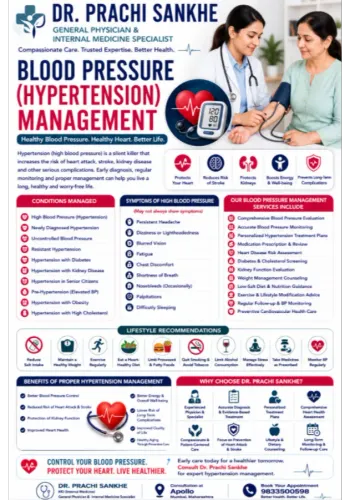
This is relevant because conditions such as hypertension and abnormal blood glucose can sometimes exist without obvious early symptoms. Risk may also increase gradually with age, weight gain, family history, inactivity, smoking, or other factors.
For adults in Ulwe, Maharashtra, preventive discussions may cover blood pressure, metabolic health, lifestyle habits, vaccination, and age-appropriate screening based on individual circumstances.
The distinction can be understood simply:
Symptom-based care focuses primarily on a current problem.
Preventive care focuses on identifying relevant risks, monitoring health indicators, and reducing avoidable complications where possible.
An effective healthcare routine usually combines both.
For instance, a patient may initially consult a physician because of an infection. During the visit, a consistently elevated blood pressure reading could indicate a need for further monitoring. Similarly, someone attending a routine assessment may mention a symptom that warrants separate evaluation.
Preventive strategies should also be individualized. Screening appropriate for a 25-year-old without significant risk factors will not necessarily be the same as screening for a 60-year-old with diabetes, hypertension, and a family history of cardiovascular disease.
Dr Prachi Sankhe provides physician consultations in Ulwe that can include evaluation of current medical concerns alongside appropriate preventive health discussions.
People considering preventive assessment should keep previous laboratory reports, prescriptions, vaccination information, and details of significant family illnesses available. These records can help a doctor understand changes over time.
For residents across Ulwe and Navi Mumbai, the most practical approach is not to wait for every condition to announce itself through symptoms. At the same time, preventive medicine should not become indiscriminate testing.
Well-planned Preventive Health Care focuses on relevant risks and evidence-based monitoring. Combined with timely consultations for new symptoms, it can provide a more complete approach to maintaining health throughout adulthood.
Keywords