
Living with a long-term medical condition requires a different approach from treating an occasional fever or infection. Effective chronic diseases management depends on regular monitoring, appropriate medication use, preventive care, and coordination when more than one condition is present.
Choosing a doctor for ongoing care therefore involves looking beyond a single consultation.
People with diabetes, hypertension, asthma, cholesterol abnormalities, and other chronic health concerns often need follow-up over months or years. During that time, symptoms, medicines, test results, lifestyle, age, and associated health risks may change.
Continuity should be one of the first factors to consider.
A doctor who can review previous reports and understand how measurements have changed over time may have more clinical context than someone seeing the patient for the first time at every visit.
Medication review is equally important. Patients with multiple conditions may take several medicines each day. A treating physician should know the complete medication list, including medicines prescribed elsewhere and regularly used non-prescription products.
When evaluating ongoing medical care, consider whether consultations address:
- Current symptoms and day-to-day functioning
- Treatment adherence and possible side effects
- Relevant blood tests or monitoring
- Blood pressure, glucose, or other condition-specific measurements
- Lifestyle factors that influence the condition
- Changes in health since the previous appointment
- Need for specialist referral or additional evaluation
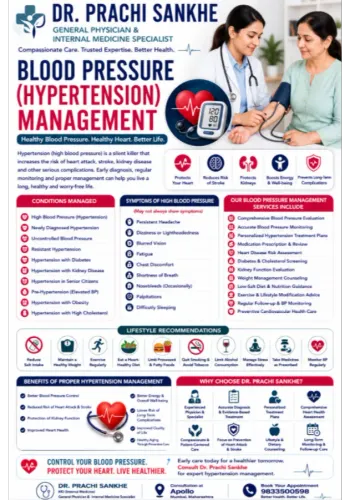
Dr Prachi Sankhe provides general medical consultations in Ulwe for adults requiring continuing care for common chronic health conditions.
Location and accessibility also matter more for long-term care than they might for a one-time consultation. Patients living in Ulwe or nearby areas of Navi Mumbai may benefit from having routine physician care that is practical to access for scheduled follow-ups as well as unexpected changes in symptoms.
Another useful indicator is whether patients receive clear guidance about what happens between visits. Someone managing hypertension should understand how blood pressure may need to be monitored. A person with diabetes should know which glucose records are useful to maintain. Patients with respiratory disease should know which worsening symptoms require earlier assessment.
Good long-term care also recognizes when another specialist should become involved. Primary physician care and specialist care can complement each other rather than compete. Referral may be appropriate when diagnosis is uncertain, a condition becomes difficult to control, complications develop, or specialized investigations and treatment are needed.
For patients across Ulwe, Navi Mumbai, and Maharashtra, choosing care for chronic diseases is ultimately about building a sustainable medical routine. Regular follow-up, organized health records, appropriate monitoring, medication review, and timely escalation when circumstances change can make long-term healthcare more systematic and easier to manage.
Keywords